

Is a dynamometer result objective?
It is more objective than a feeling, but still depends on protocol, effort, pain and fatigue.
A dynamometer measures force, but a useful grip-strength result is not just “squeeze as hard as possible once”. Position, protocol, fatigue, pain, hand dominance and repeatability all matter. That is why the number is most useful when measured consistently.
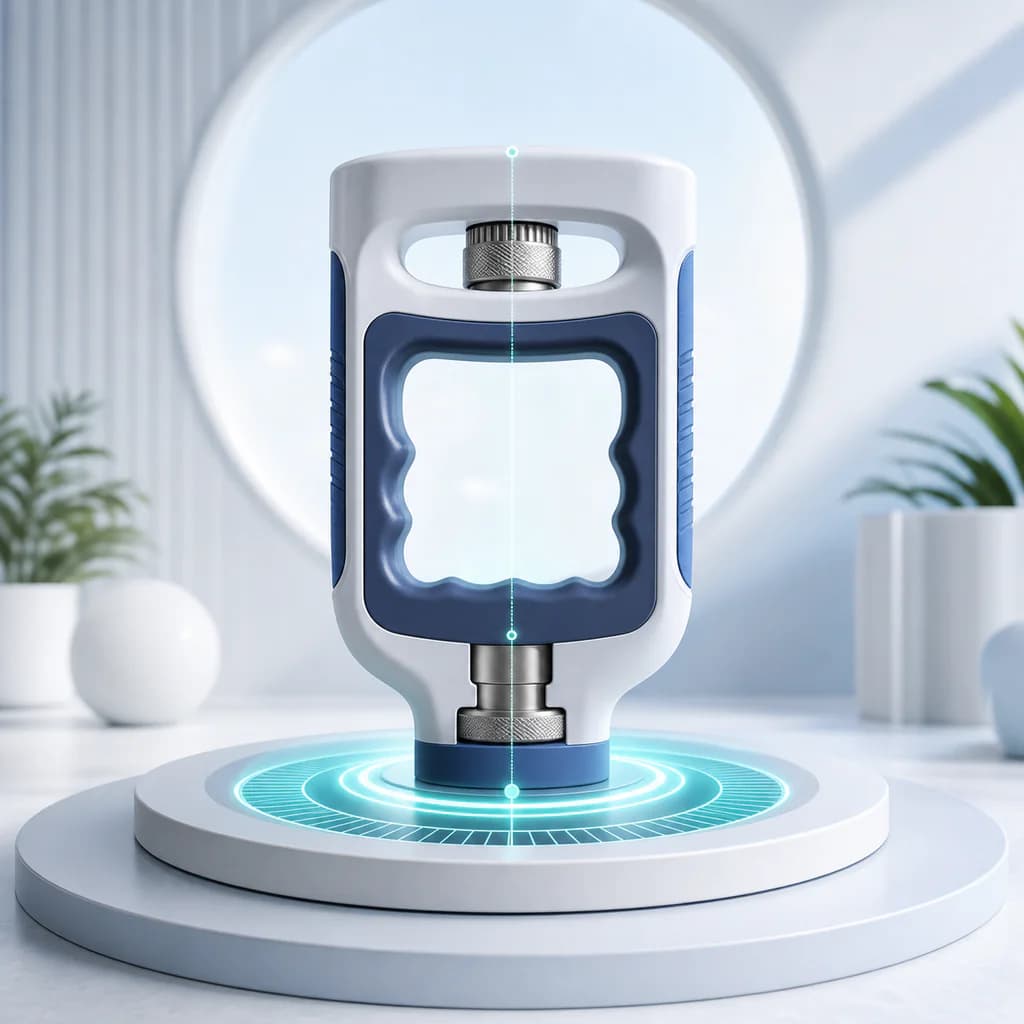
A grip dynamometer measures the force produced during a hand grip. InGrip uses this idea to add a functional strength layer next to InBody.
The result can be influenced by hand size, handle position, wrist and elbow position, effort, pain, fatigue and whether the dominant hand is tested.
That makes protocol important. The same person can produce a different number when the setup changes.
One result may reflect the day: poor sleep, recent training, soreness, pain or hesitation during the test. Repeated measurements under similar conditions are more useful.
The goal is not to chase the biggest possible number at any cost, but to get a comparable result that can be interpreted over time.
If strength changes, read it next to InBody, training and how the person actually feels and functions.
Avoid hard grip or upper-body training immediately before the test if you want a clean comparison. Pain, injury or fatigue should be noted.
Use the same protocol and similar rest whenever possible. If something was different, the result can still be useful, but it should be interpreted more carefully.
Keep the same device and handle setting, body position, elbow and wrist position, instructions, number of attempts and rest between attempts. Test both hands in the same way and use the same rule for reporting the result. Recording these details makes a later comparison more useful.
A home device can give orientation, but price alone does not establish accuracy. For ongoing monitoring, check calibration, handle fit, a repeatable protocol and how results are stored. A professional setup is useful when these allow consistent follow-up alongside body composition.
The result does not measure whole-body strength, diagnose sarcopenia, explain why strength is low or replace rehabilitation assessment. Even a high value does not prove that everything is healthy.
Do not force a maximal squeeze through pain, recent hand injury or recovery from surgery. Sudden weakness, numbness or a marked difference between sides needs appropriate healthcare assessment. The priority is safe testing, not the largest number.
About the measurement
The main page about grip strength measurement and how InGrip complements InBody.
FAQ
It is more objective than a feeling, but still depends on protocol, effort, pain and fatigue.
For trend comparison, usually no. Fatigue can temporarily lower the result.
InBody shows structure; a dynamometer adds function. Together they are more useful than either number alone.
Combined with InBody, a consistent protocol and repeated measurement, the dynamometer result becomes much more practical than a one-time strength test.