

Is DEXA always better than InBody?
Not for every use. DEXA can be more reference-like, but InBody may be more practical for regular trend tracking.
No body composition method is perfect for every situation. DEXA, calipers, professional InBody and simple BIA devices each answer a slightly different question and have different trade-offs. The best choice depends on whether you need precision, practicality, repeatability or everyday trend.
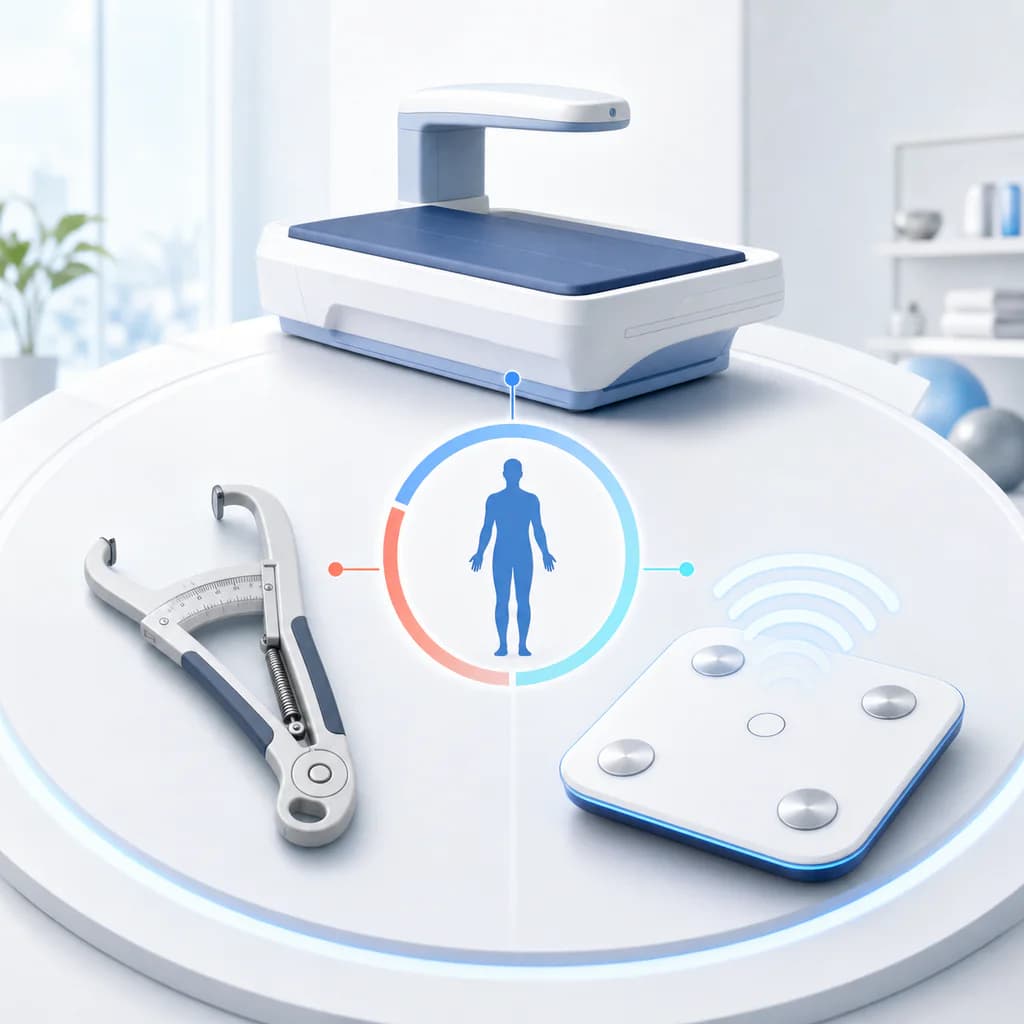
DEXA is often treated as a reference method for body composition, but it is less practical for frequent everyday tracking. Calipers are simple and inexpensive, but depend heavily on technique and which skinfold sites are used.
Simple BIA scales are easy to use at home, but usually have fewer measurement paths and less context. Professional InBody adds segmental, multi-frequency measurement and a richer result sheet.
The right method is not only about theoretical accuracy. It is also about whether you can repeat it reliably and use the result in real decisions.
| Area | Main strength | Main limitation |
|---|---|---|
| DEXA | Detailed reference-style body composition scan. | Less practical for frequent routine tracking. |
| Calipers | Simple and inexpensive when done well. | Strongly technique-dependent and less complete. |
| Home BIA scale | Easy frequent routine at home. | Simpler measurement path and less reliable comparability with professional devices. |
| InBody | Practical repeated trend with muscle, fat, water and segments. | Still bioimpedance, so preparation and water matter. |
For most visitors, the practical question is not which method gives the most impressive one-time number, but which method can be repeated under similar conditions.
If you are tracking fat loss, muscle gain or return to training, consistent repeated measurement is often more useful than a single result from a method you will not repeat.
InBody is strong in this everyday tracking role because it is quick, detailed enough and easier to repeat.
Different methods measure or estimate different things using different assumptions. DEXA, calipers and BIA should not be expected to produce identical body fat percentages.
Even two BIA devices can differ because of electrodes, frequencies, measurement path and algorithms.
If you want trend, avoid mixing methods casually. Use the same method and similar conditions whenever possible.
DXA uses low-dose X-rays and can assess bone mineral and, in a whole-body scan, fat and lean soft tissue. It is a useful reference but still depends on equipment, software, positioning and protocol; water and glycogen can affect soft-tissue results. Clinical bone-density questions require an appropriate healthcare examination.
Calipers measure skinfold thickness at selected sites and use equations to estimate fat. Consistent sites, a calibrated tool and the same skilled operator matter. Calipers do not provide body-water or segmental lean-mass information, and difficult-to-measure folds can limit their usefulness.
BIA measures electrical impedance and estimates body composition through a model. Home scales and professional segmental systems differ in measurement paths and outputs, but all need attention to hydration, preparation and the particular device.
Consider the detail you need, whether you can repeat the protocol, cost and availability, and who will interpret the result. A periodic clinical reference and routine InBody tracking can coexist, but their small numerical differences should not be treated as biological change.
Questions about osteoporosis, pregnancy, illness, unusual swelling or major unexplained changes belong with a qualified healthcare professional. A body-composition comparison is supporting information, not a substitute for diagnosis.
About the measurement
The main page about body composition measurement, result output and the visit.
Values explained
FAQ
Not for every use. DEXA can be more reference-like, but InBody may be more practical for regular trend tracking.
Only carefully. They use different assumptions and can produce different percentages. Trend is clearest when the method stays consistent.
For many people, the best method is one they can repeat under similar conditions and understand well enough to act on. InBody is practical for that role.
InBody is strongest when you need a reasonably detailed and repeatable trend without complicated logistics and without turning one number into a health verdict.