

Is home blood pressure more accurate?
It can be very useful if measured correctly and repeatedly. Poor technique at home can still distort the result.
Blood pressure is not a fixed number. It changes with time of day, stress, movement, posture, caffeine, sleep and measurement technique. That is why home values and on-site values can differ without one of them being automatically wrong.
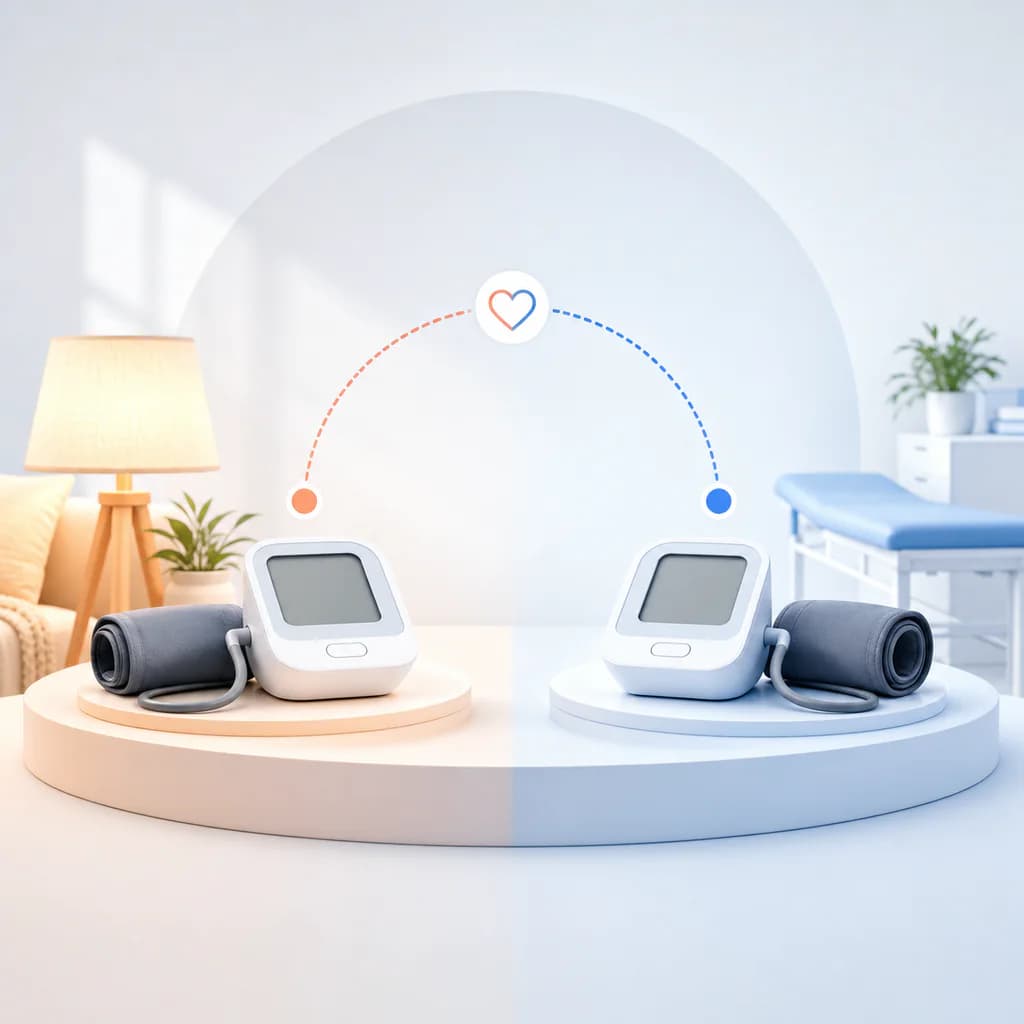
At home you may be calmer, in a familiar environment and able to repeat the measurement. During a visit, the value can be affected by walking in, talking, stress, timing or simply a different setup.
The opposite can also happen. Home technique may be weaker, cuff size may be wrong or the measurement may happen without proper rest.
This is why a log of repeated values is more useful than one remembered number.
Compare values taken in a similar state: seated, rested, with the arm supported and without talking during the measurement.
Write down date, time, systolic and diastolic pressure, pulse and circumstances. This gives a doctor or professional more context than a single isolated value.
For a home log, ESC guidance uses two readings one to two minutes apart, morning and evening, for at least three and ideally seven days, followed by an average of all readings. Use a validated upper-arm monitor with the right cuff. ESC uses at least 140/90 mmHg for office hypertension and at least 135/85 mmHg for a home average; neither threshold should be assigned automatically to a single on-site reading. Urgent symptoms should never wait for a seven-day log.
If values are repeatedly high at home or on site, discuss the pattern with a healthcare professional.
A one-time difference may be ordinary variability. A repeated pattern is more important: consistently high home values, consistently high on-site values or large swings even at rest.
At systolic pressure of at least 180 or diastolic pressure of at least 110 mmHg, ESC recommends assessment for a possible hypertensive emergency. Without serious symptoms, repeat the reading after a short rest and contact a clinician promptly. Chest pain, marked breathlessness, one-sided weakness, speech difficulty, sudden confusion or fainting call for emergency help without waiting for another reading or a particular number.
White-coat hypertension refers to high office pressure with a lower home or ambulatory average; masked hypertension is the reverse, with office pressure below the hypertension threshold but a high out-of-office average. These clinical labels require properly collected readings. A difference between one MojeInBody reading and home results does not establish either condition.
A clinician can assess a consistent home record and decide whether 24-hour ambulatory monitoring is appropriate. A spot check at MojeInBody adds one reading under particular conditions but cannot replace an office assessment, a home protocol or ambulatory monitoring.
Use a validated upper-arm monitor with the right cuff size. Sit quietly for at least five minutes with back and arm supported, feet flat and the cuff at heart level. Avoid exercise, nicotine and caffeine for 30 minutes beforehand; do not talk during measurement. Take repeated readings according to the agreed protocol rather than selecting the lowest number.
Record date, time, both pressure values, pulse, symptoms and circumstances. Discuss persistent differences or repeated high readings with a clinician, especially with pregnancy, known cardiovascular or kidney disease, or medication affecting pressure. Do not change prescribed treatment based on a single result.
About the measurement
The main page about blood pressure, pulse and supporting values.
More reading
FAQ
It can be very useful if measured correctly and repeatedly. Poor technique at home can still distort the result.
Stress, movement, talking, timing and not resting long enough can all raise the reading.
Yes, if blood pressure is a repeated concern. Note date, time, systolic and diastolic pressure, pulse and context.
BPBIO750 adds one blood pressure reading in Prague. Compare it with a properly collected home record and discuss persistent differences with a clinician; it is not a standalone diagnosis.