

Does coffee really matter before a blood pressure test?
Yes, especially if you want a reading that can be compared with another day. Caffeine is one of the common reasons a result is shifted.
Your blood pressure result depends on a suitable monitor, the right cuff and the conditions of measurement. One number reflects a particular moment; repeated, correctly taken readings help show your usual pressure and changes over time.
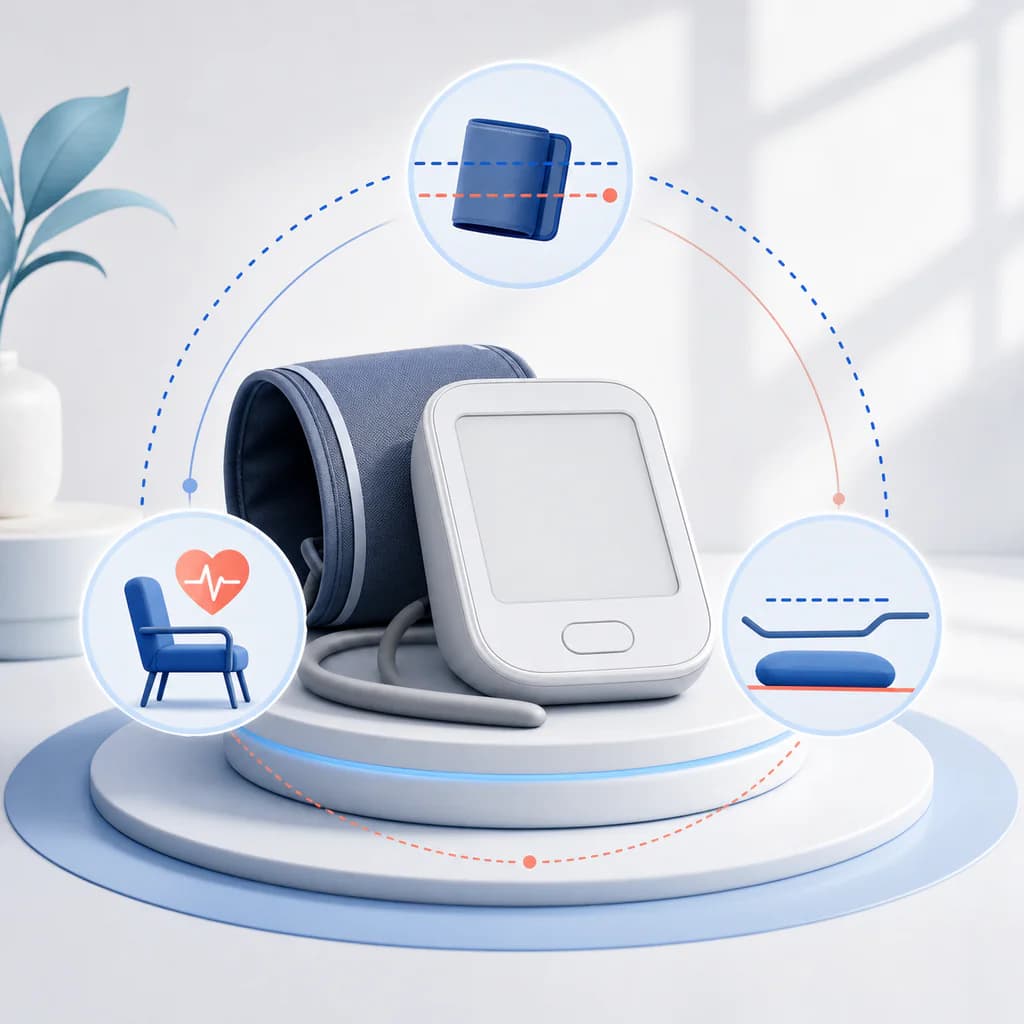
Blood pressure is not a fixed number. It reacts to movement, stress, pain, talking, caffeine, nicotine and how long you have been sitting quietly before the reading.
That is why standard guidance starts with basics: sit quietly before the test, avoid caffeine, smoking and exercise right beforehand, keep your back supported, feet on the floor and arm supported at heart level. This is not overkill. It is what makes the reading more representative of resting blood pressure.
A practical rule is to avoid exercise, smoking and caffeine for about 30 minutes before the test. It also helps not to arrive and measure immediately after stairs, rushing or stress. If you can, empty your bladder and sit quietly for a few minutes first.
If you want repeated readings to mean something, try to measure at a similar time of day and under similar conditions. Comparing a calm morning reading with a late stressed afternoon is much less useful than comparing like with like.
For BPBIO750, follow the manufacturer’s instructions: rest for at least 5 minutes before the test and allow about 5 minutes between repeat tests. The one-minute home protocol is not an instruction for every device.
At home, prefer a clinically validated automatic upper-arm monitor with the correct cuff size. Take two readings about one minute apart and record both; one casual reading or an unvalidated wrist device is not a reliable basis for a conclusion.
During the test, the goal is a quiet and steady body position: back supported, feet flat on the floor, legs uncrossed, arm relaxed at heart level and no talking. With home devices, cuff placement on a bare arm and an appropriate cuff size also matter.
Talking, moving or tensing the arm can shift the result. Measure quietly with the arm supported and remember that each reading still reflects one particular moment.
The most common problem is simple: arriving hurried, stressed, after stairs, after coffee or without a short rest. Another frequent issue is tension or conversation during the reading.
Pain, poor sleep, alcohol from the previous evening, a full bladder, some medications and measuring at a very different time of day can all change interpretation. Irregular rhythm can also make blood pressure reading less straightforward and may need proper medical follow-up.
If a value is higher or lower than expected and there are no serious symptoms, rest briefly and measure again. For home monitoring, AHA recommends two readings about a minute apart; when using BPBIO750, follow the manufacturer’s interval of about five minutes between tests. Record the readings and their circumstances.
Discuss repeated high readings taken correctly at rest with a clinician. ESC 2024 classifies office systolic pressure of 120–139 or diastolic pressure of 70–89 mmHg as elevated, unless the other component is already in the hypertension range; the office hypertension threshold is systolic at least 140 or diastolic at least 90 mmHg. Home averages use different thresholds.
At systolic pressure of at least 180 or diastolic pressure of at least 110 mmHg, ESC recommends assessment for a possible hypertensive emergency: without serious symptoms, confirm the reading after a short rest and contact a clinician promptly. Chest pain, marked breathlessness, new speech difficulty, one-sided weakness, confusion or fainting call for emergency help without waiting for another reading or a particular number.
To follow changes over time, keep the method, timing and preparation as consistent as possible. Blood pressure varies naturally through the day, so even several comparable readings cannot by themselves explain what caused a change.
In practice, the BPBIO750 or a home monitor becomes most valuable when the reading is not treated in isolation. Pulse, symptoms, daily routine and repeat measurements all matter.
About the measurement
The main page about blood pressure, pulse and supporting values.
Values explained
More reading
FAQ
Yes, especially if you want a reading that can be compared with another day. Caffeine is one of the common reasons a result is shifted.
Yes. Talking and movement can shift the reading. Quiet stillness is a simple but important part of accuracy.
Yes, if the goal is a meaningful trend. Blood pressure naturally varies through the day, so similar timing makes repeat readings easier to compare.
No. One result can be distorted by conditions; discuss repeated high readings with a clinician. For very high pressure or serious symptoms, follow the urgent advice above.
BPBIO750 gives one blood pressure reading under particular conditions. It is most useful alongside correctly taken repeat readings, symptoms and clinical context.